As the United States and its international partners prepare to expand human and robotic exploration of the Moon, Mars, and beyond, the need for precise, autonomous timekeeping and navigation has become critical. Current approaches rely on Earth-based infrastructure such as GPS constellations, radio ranging, and communications links — systems that are costly to deploy, degrade with distance from Earth, and are vulnerable to communication disruptions. Millisecond pulsars, rapidly rotating neutron stars that emit highly regular pulses across radio, X-ray, and gamma-ray wavelengths, offer a compelling alternative. With long-term fractional frequency stability rivaling that of atomic clocks and microsecond timing precision, pulsars can serve as cosmic, natural, universal timing beacons accessible anywhere in the solar system and beyond, providing autonomous positioning, navigation, and timing (PNT) independent of Earth-based systems.
This study will assess the feasibility and performance of pulsar-based PNT for lunar, orbital, and deep-space missions, building on key milestones such as NASA's NICER/SEXTANT demonstration of autonomous X-ray pulsar navigation aboard the International Space Station and recent JPL work developing a radio pulsar-based lunar coordinated timekeeping instrument concept for use on the lunar surface. The study will explore tradeoffs between radio and X-ray solutions in terms of instrument size, weight, power, achievable precision, and operating environment. It will quantify achievable timing and positioning accuracy through error budgets and simulation frameworks, identify useful pulsar populations in both wavebands, and define technical requirements for representative future NASA or ESA missions. The team will also compare pulsar-based approaches against alternative systems — including GPS, atomic clocks, Delta-DOR, and LunaNet — to clarify the unique advantages and limitations of each.
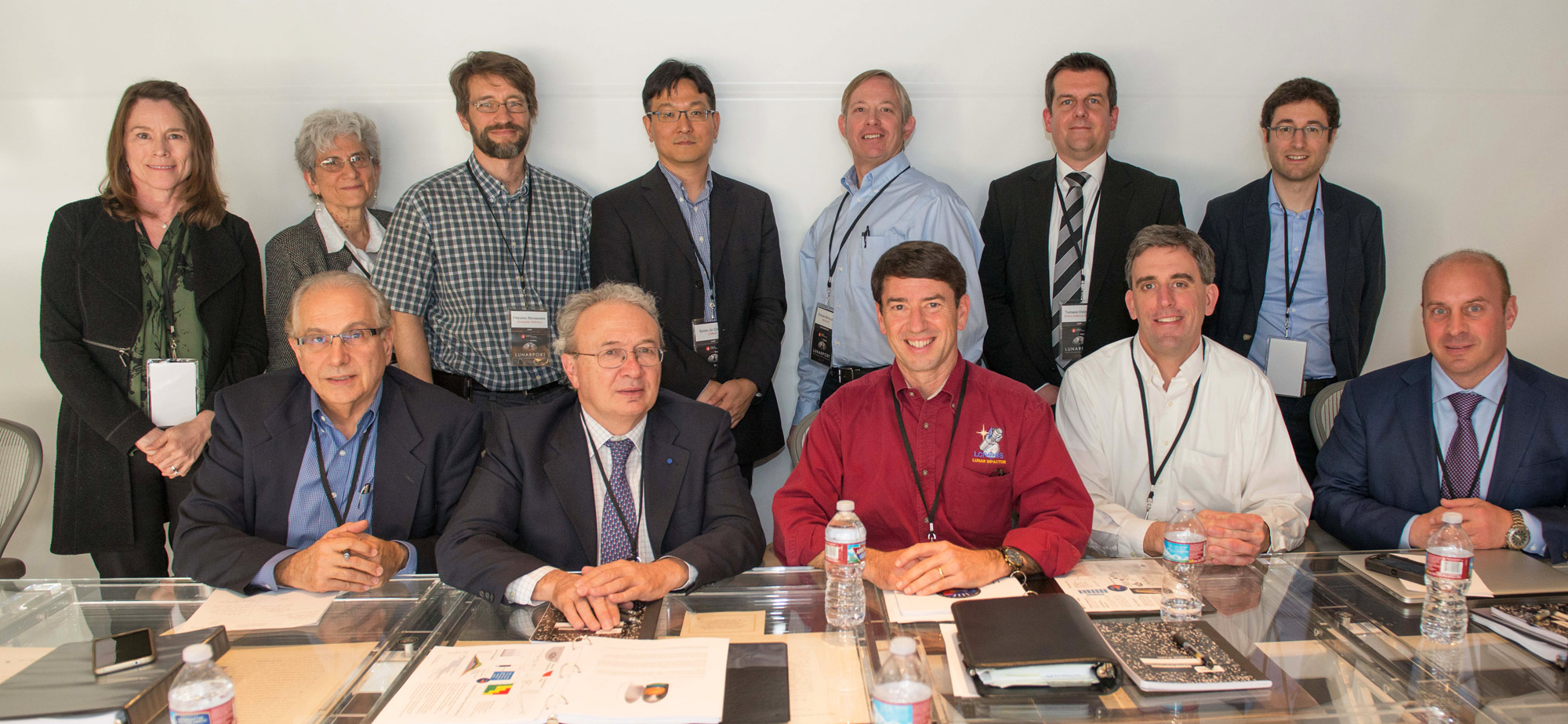
The workshop will bring together a multidisciplinary team of scientists and engineers spanning X-ray and radio instrumentation, pulsar astrophysics, navigation and estimation techniques, clock technologies, JPL Deep Space Network operations, RF instrumentation, lunar and mission design, with representation from NASA, ESA, CSIRO, and leading universities across the U.S., Europe, and Australia.
The KISS study outputs will define the critical gaps, key unknowns, and development path from the current state of the art to an operational pulsar-based PNT capability for implementation in NASA, ESA, and commercial space programs. This study is timely given the White House directive and congressional legislation establishing Coordinated Lunar Time, the growing demand for autonomous operations beyond Earth, and significant recent advances in pulsar timing science and compact instrument design that make a practical system achievable within the coming decade.